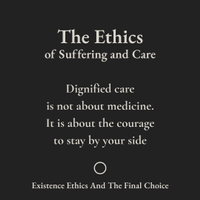
The Ethics of Suffering and Care
- Foundation date
17 November 2025
The Ethics of Suffering and Care
by Anna Pivtorak Kostyuk
17.11.2025
The ethics of suffering is one of the areas where society expresses its harshest and most superficial judgments. My first associations are not about morality but about hypocrisy: people condemn medical professionals who ease pain, while they themselves often avoid even witnessing the real suffering of their loved ones. Whom do we believe we have the right to judge?
My personal experience shaped my ethical stance irrevocably. When my mother’s cancer returned, her only request was clear: she did not want to die in a hospital. She wanted her own home, her dignity, her silence. Calling the palliative care service became essential. They helped me see what the eyes could easily miss — her silent suffering, expressed in labored breathing alone. From that moment, I learned to administer injections, kept a detailed log, coordinated with her doctor, and remained by her side until the very end. This was my moral duty — as a daughter and as a human being.
At a deeper level, palliative care is the cornerstone of any honest conversation about the Right to Die. It does not merely relieve pain; it verifies the hopelessness of the condition and supports decisions that may appear frightening but are profoundly humane. When painkillers stop working, I see no ethical distinction between a lethal injection and the withdrawal of life support. The only requirement is a clear protocol that protects doctors from prosecution.
Finally, society cannot ignore the reality of limited healthcare resources. The moral priority must be to direct intensive care toward those who can still be cured. Support for the terminally ill must continue, but not at the cost of everything else.
The cultural dimension raises another distinction: physical suffering versus suffering rooted in severe mental disorders. Psychological pain often intensifies when there is no wise person willing to invest time in long-term conversation. Antidepressants do not heal loneliness. That is why mental suffering requires a separate mentorship system, designed to help patients learn how to live again.
For me, the ethics of suffering is not about death. It is about presence. About whether we can face the truth. About whether we understand that human dignity is measured by how we stand with someone until the last moment.
🖋️ "Dignified care is not about medicine. It is about the courage to stay by your side."
— Anna Pivtorak Kostyuk
#ExistenceEthicsAndTheFinalChoice #EthicsOfSuffering #PalliativeCare #AnnaPivtorak #RightToDie #EthicsOfCare #HumanDignity #PivtorakStudio #Essay #AnnaPivtorakKostyuk