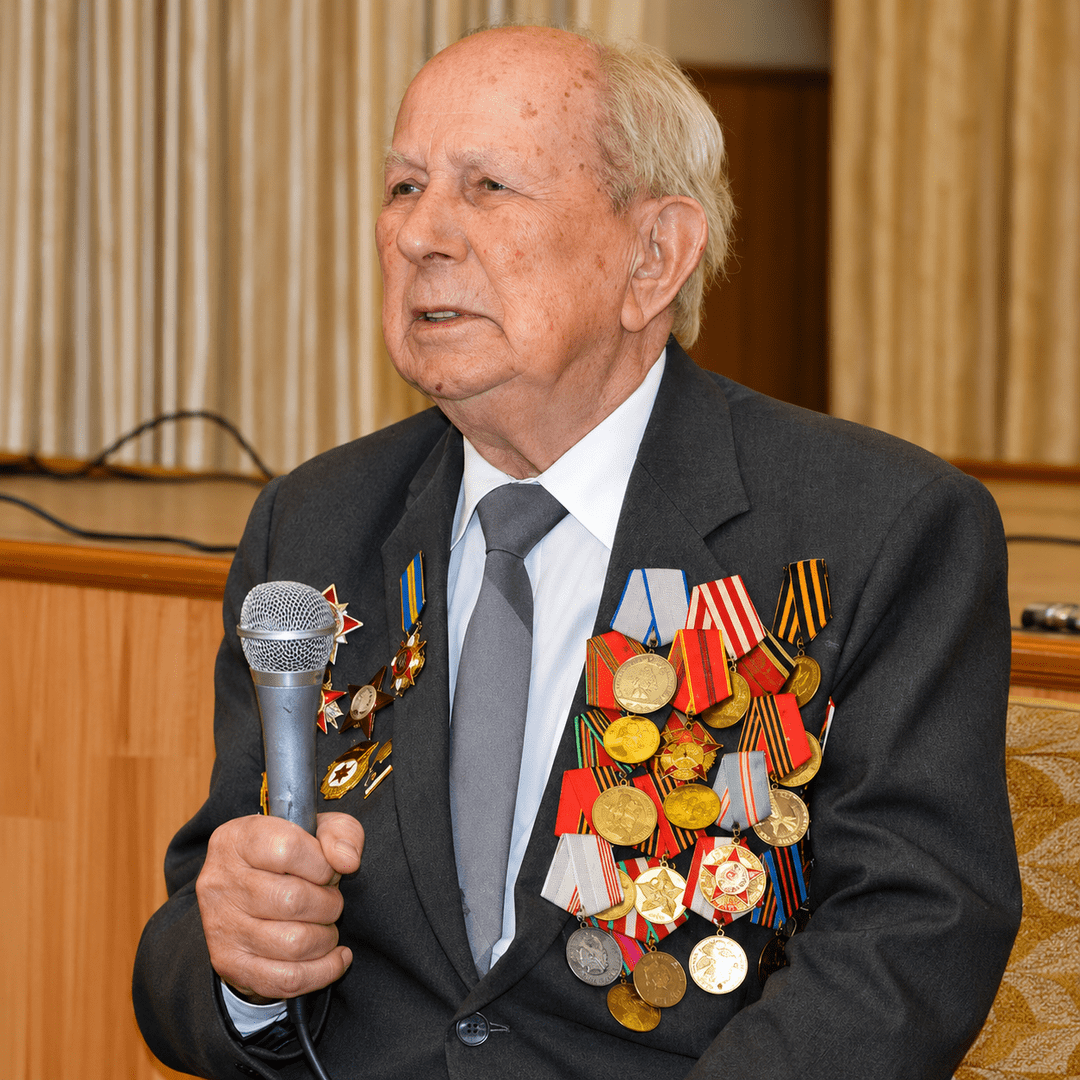
(en) Mykola Fedorovych Dovbysh
Second World War veteran, Railway employee
- Occupation
Second World War veteran, Railway employee
- Date of birth
22 November 1921
- Date of death
20 November 2015 (93 years)
- Citizenship (s)
 Ukraine
- Place of Birth
Popivka village, Sumy Oblast, Ukraine
- A place of death
Mykolaiv, Ukraine
- Cause of death
Natural causes, at an advanced age.
- Burial place
Mykolaiv, Ukraine
- Place of work
South-Western Railway
- Cities of Residence
Popivka
Konotop
Mykolaiv
- Education
Popivka Secondary School, graduated in 1940.
Military German-language Interpreter Training School. His studies were interrupted by the Second World War.
Higher School of the Trade Union Movement, Minsk.
- Parents and Relatives
Mother: Kateryna Dovbysh
Father: Fedir Dovbysh
- Family
Wife: Kateryna Oleksiivna Dovbysh
Daughter: Nadiia Mykolaivna Kostiuk (Dovbysh)
Daughter: Vira Mykolaivna Kuznietsova (Dovbysh)
Grandchildren
Oleksandr Anatoliiovych Kostyuk
Olena Oleksiivna Filatova (Kuznietsova)
Anna Anatoliivna Pivtorak (Kostyuk)
Iryna Oleksiivna Kriuchkovska (Kuznietsova)
Descendants
Great-grandchildren: 8
Great-great-grandchildren: 5
- Awards and Decorations
Received numerous awards for his service during the Great Patriotic War.
His wartime medals and accompanying documents are preserved in the family archive.
Mykola Fedorovych Dovbysh was born on 22 November 1921 in the village of Popivka, Sumy Oblast, Ukraine.
His childhood was difficult. His father, Fedir, served in the militia and died from injuries sustained while performing his official duties. There were two sons in the family: Mykola and his younger brother, Oleksandr. Known at home as Shura, Oleksandr died of pneumonia when he was still very young. Mykola Fedorovych remembered his brother throughout his life and later asked that grandchildren be named Oleksandr in his honour.
After his father's death, the family went through a difficult period. From an early age, Mykola had to work hard and help with household tasks. Despite these circumstances, he was determined to continue his education. His mother, Kateryna, was particularly insistent that he complete his secondary schooling. After finishing the seventh grade, Mykola decided to continue his studies in Konotop. However, there were no places available in the eighth grade at the time. He therefore had to spend another year in the seventh grade so that he could progress with his education the following year. To attend school, he travelled to Konotop by train every day and walked the remaining distance. He graduated from Popivka Secondary School in 1940.
After graduating, Mykola was drafted into the army. Because of his education, he was assigned to a school for military German-language interpreters. However, he was unable to complete his training: the Second World War began.
The war caught him near Leningrad. He served in the Red Army and experienced encirclement, hunger, wounds and concussion. After treatment, he returned to military service on several occasions. His wartime experience was harsh and left a lasting mark on his life. Mykola Fedorovych met Victory in the German city of Zerbst.
In recognition of his participation in the war and his military service, he received numerous awards. In the years of peace, the memory of what he had experienced remained an important part of his life.
It was also after the war that he met his future wife, Kateryna Oleksiivna. Their acquaintance quickly developed into love, and they married approximately two months later. They spent seventy years together. They had two daughters, Nadiia and Vira.
After the war, Mykola Fedorovych worked as a cashier for the South-Western Railway. Later, the trade union organisation sent him to study at the Higher School of the Trade Union Movement in Minsk. He initially went there alone and later brought his family to join him.
In the memories of his family and fellow villagers, Mykola Fedorovych is remembered not only as a conscientious worker but also as someone willing to help others. As a cashier, he tried to accommodate railway employees who asked for a small advance until payday. These short-term loans were issued from the enterprise's cash office and recorded through the ordinary cash accounting system. He was willing to help people when they needed it.
One family story seems especially striking in light of his long life. A man who had once received a loan from the enterprise's cash office through Mykola Fedorovych stopped him one day, took his hand and told him what he believed lay ahead. He wished him a long life — to the age of 93 — a good wife, a large family and worthy descendants. All of these wishes came true.
Around 1985, the family moved from Konotop to Mykolaiv, where the final decades of his life were spent.
Mykola Fedorovych remained actively involved in veterans' events. He was invited to schools, commemorative gatherings and meetings, where he spoke to children about the war and shared his experiences. His presence became a familiar and valued part of these occasions.
Mykola Fedorovych Dovbysh lived to the age of 93. He passed away on 20 November 2015, just two days before his 94th birthday.
His memory lives on in his family, in the recollections of those who knew him, and in the stories passed down to future generations.
Our grandfather, Mykola Fedorovych was almost always busy with something at the family garden plot. He loved his garden, looked after the trees, planted vegetables and took great care of the harvest. It was not simply a hobby for him, but a natural part of everyday life. Whenever we visited him, there were always fresh vegetables and fruit on the table, grown in the family garden rather than bought from a shop.
We affectionately called him “Chocolate”. The Mykolaiv sun certainly played its part: he could spend the entire day outdoors at the garden plot and became so deeply tanned that the nickname seemed perfectly fitting.
He was very kind to his grandchildren, attentive and exceptionally refined in manner. He had a wonderful way of telling stories, making them both vivid and engaging. Every story carried the weight of a life lived, his experience and his own perspective on the world.
He loved his wife, Kateryna Oleksiivna, deeply and treated his daughters with great respect. He showed the same respect to his sons-in-law, always addressing them by their full names and patronymics: Anatolii Ivanovych and Oleksii Illich. This simple habit reflected his good manners, respect for others and inner dignity.
That is how he remains in my memory: a hardworking man who loved his garden, a kind grandfather and a true gentleman. A man who knew how to love his family, care for them and find joy in the simple things in life.