Euthanasia and The Right to Choose. The Ethical Imperative
- Foundation date
09 November 2025
Euthanasia. The Right to Choose
by Anna Pivtorak Kostyuk
09.11.2025
The topic of euthanasia evokes mixed emotions — discomfort, clarity, and at times even relief. My first associations relate to dignity, the limits of suffering, and the right of a human being to end life in a way that preserves meaning and reduces pain. In a world where death can be technologically postponed indefinitely, the ethical value of choosing to stop suffering becomes increasingly significant.
My personal view is clear: euthanasia is a lawful and necessary mechanism to end unbearable suffering by bringing about death, when recovery is impossible. Although legal in only a few countries, a passive form of it is practiced in many hospitals, because prolonging life without purpose often serves neither the patient nor their relatives. Legalization is therefore essential, if only to provide legal safety for medical personnel.
At a deeper level, understanding euthanasia requires acknowledging distinctions. Passive euthanasia — refusing extraordinary treatment — and non-aggressive euthanasia — withdrawing life support — are rational decisions when recovery is impossible. The patient’s suffering and quality of life must outweigh the medical imperative to preserve biological functioning at any cost. When a patient cannot express their will, the legal right to decide must rest with the next of kin.
Aggressive euthanasia, especially when requested due to untreatable mental suffering, is far more complex. Psychological pain can be as unbearable as physical agony. Decisions in such cases must follow years of evaluation, therapy, and participation in rehabilitation programs. A structured mentorship system is vital: if a person learns to help others, they may rediscover meaning and regain a mission worth living for.
The cultural dimension includes situations such as mercy killing or assisted suicide, especially in war conditions when a severely wounded soldier faces inhuman suffering.
The Right to Die is a human right — but it must be supported by a compassionate, structured process that either guides a dignified departure or helps the person choose life again.
Religious doctrines about the “sanctity of life” often offer little comfort to someone in unbearable pain. Human self-determination is a core freedom, and no society should force a person into desperate, violent acts of ending life alone.
Yet when a person seeks euthanasia because they believe their life’s purpose is complete, this should be reframed. Such a person is not a patient — they are someone capable of achieving goals. This means they can be guided toward a new mission.
Within the metaphysics of the soul’s journey, choosing the moment of death carries profound significance. Such a decision may indicate that the soul has not completed its lessons and risks becoming stuck in the Subtle World, unwilling to return but unable to merge with the Absolute. The same challenges may reappear in the next life, or require the help of descendants to reach the possibility of merging with Eternal Energy.
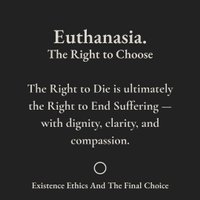
🖋️ "The Right to Die is ultimately the Right to End Suffering — with dignity, clarity, and compassion."
— Anna Pivtorak Kostyuk
#ExistenceEthicsAndTheFinalChoice #Euthanasia #TheRightToChoose #EndOfLifeEthics #HumanDignity #EthicsOfChoice #EthicsOfSuffering #AnnaPivtorak #PivtorakStudio